
For thousands of years, Zapotec communities have come together through collective acts of making, shaping one of the oldest civilizations in the Americas. These acts are guided by a deep integration of nature and human ingenuity.
Making something from nature requires an intimate understanding of the agricultural calendar and the natural path of sacred rain. Color does not simply appear — it is shaped by the soil where it is grown, by the amount of rain and sun it receives. Drought determines availability and can intensify or mute saturation. Even the side of the mountain where materials are gathered matters — whether it faces abundant sun or rests in shade and moisture.
It is in the transformation of these materials that this knowledge becomes visible. Transforming nature into color requires a deep understanding of alchemy and chemistry. Through extraction, fermentation, heat, and time, the landscape reveals itself as color.
Harvesting is not dictated solely by season, but by spiritual guidance. It cannot be done on just any day or at any hour. The timing is informed by belief, ceremony, and respect for the cycles that govern both land and life.
Indigo
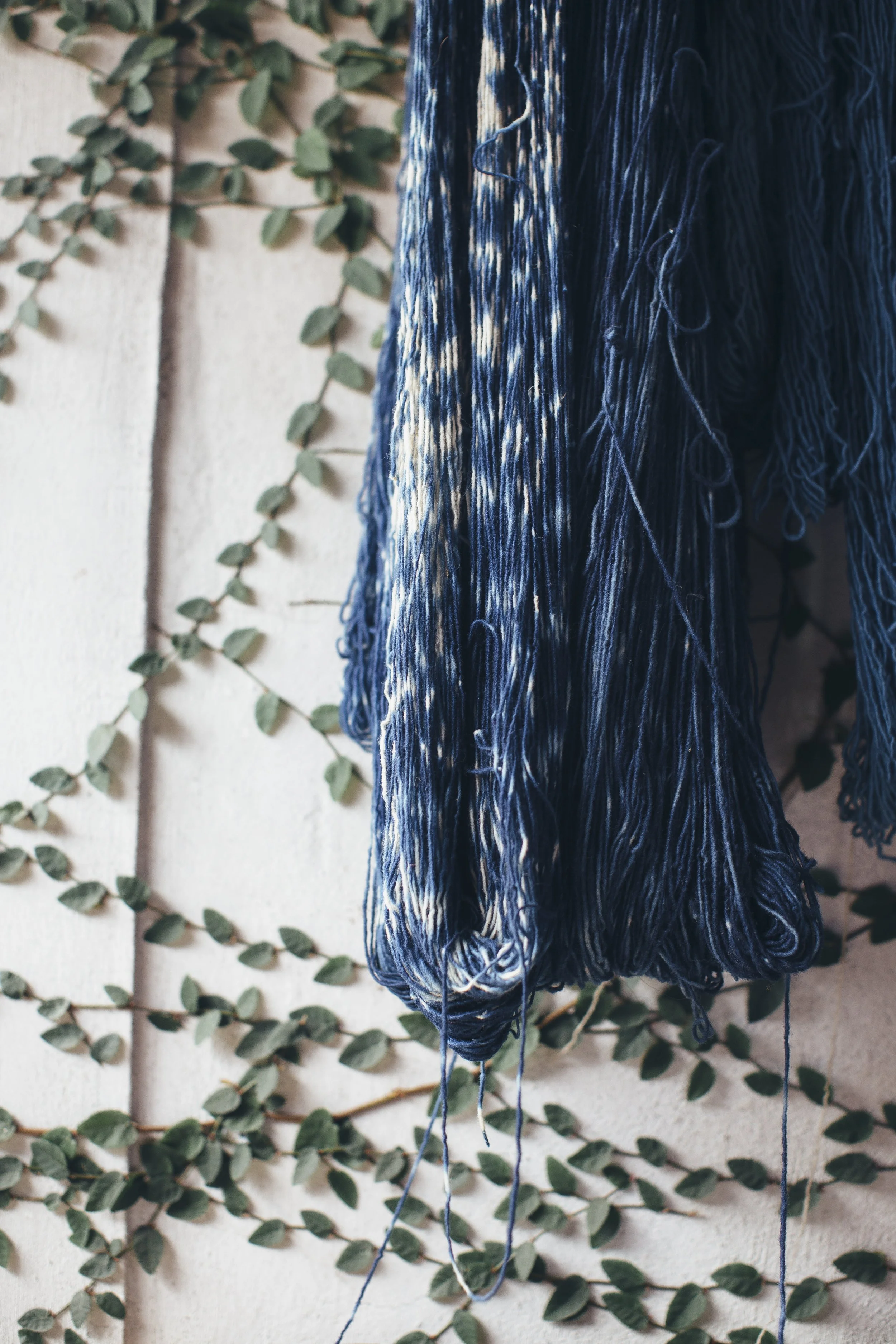
In the month of May, indigo-growing families from Santiago Niltepec, Oaxaca begin preparing the land and planting. By September, the plants are ready to be harvested.
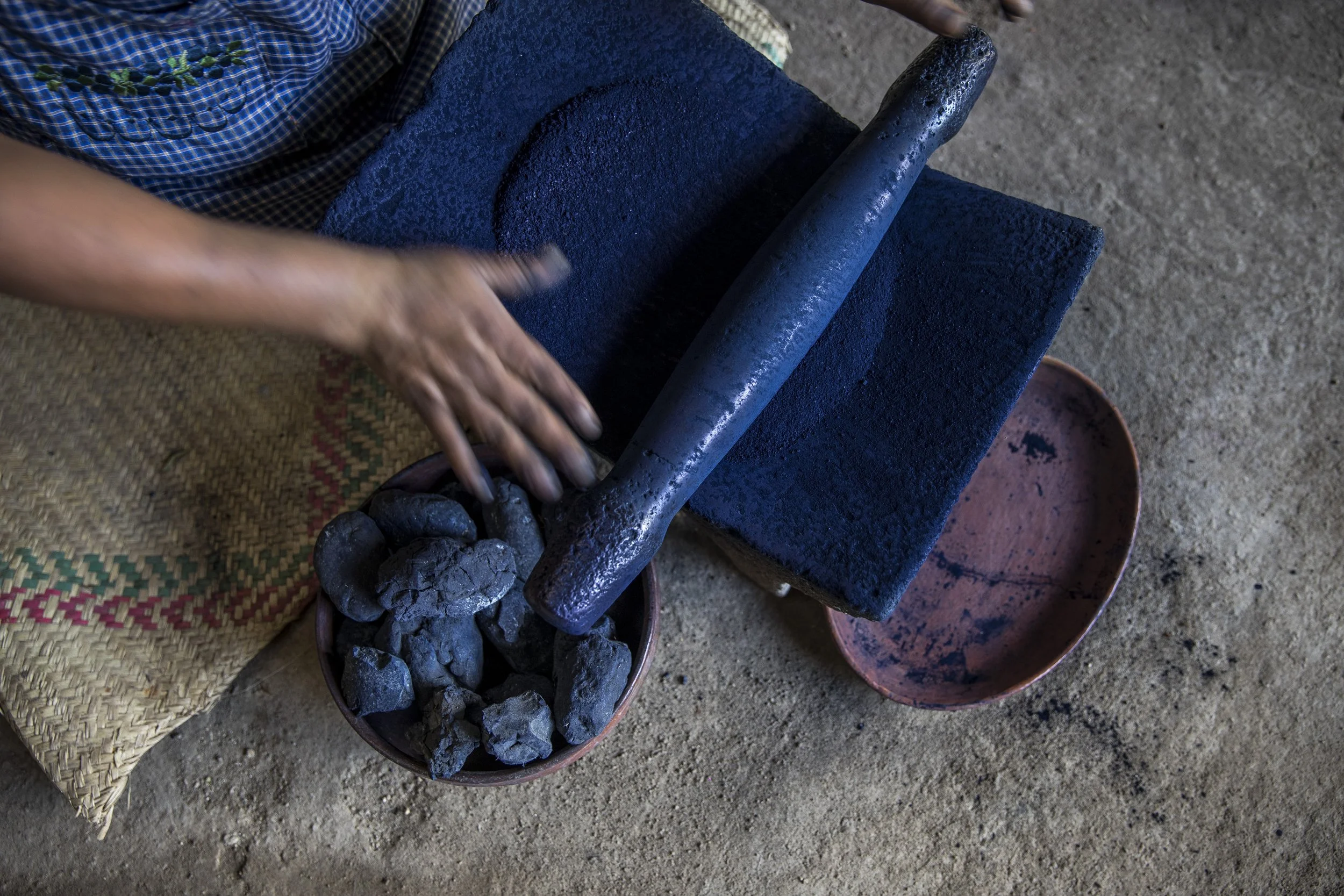
The extraction of the blue dye takes weeks and requires immense collective labor. During this time, support from extended family and community members is essential. Indigo is not produced alone—it is made through shared effort and inherited knowledge.
By October, the indigo paste is dried and ready to be used as dye. This moment is a collective blessing. Through the families’ knowledge and labor, the studio is able to work with blue, while the families receive income to support their households and continue their ancestral practice.
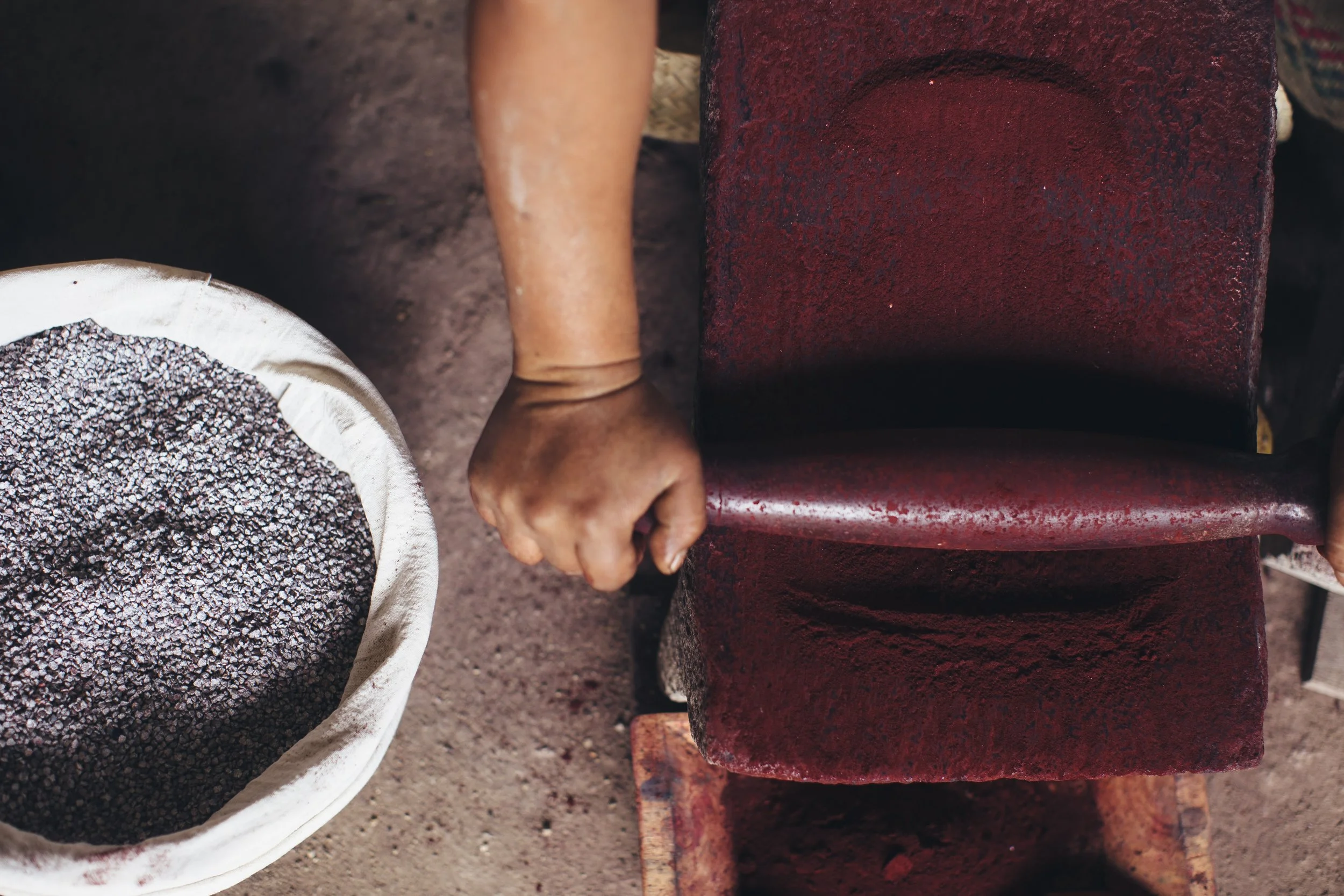
Cochineal Insect
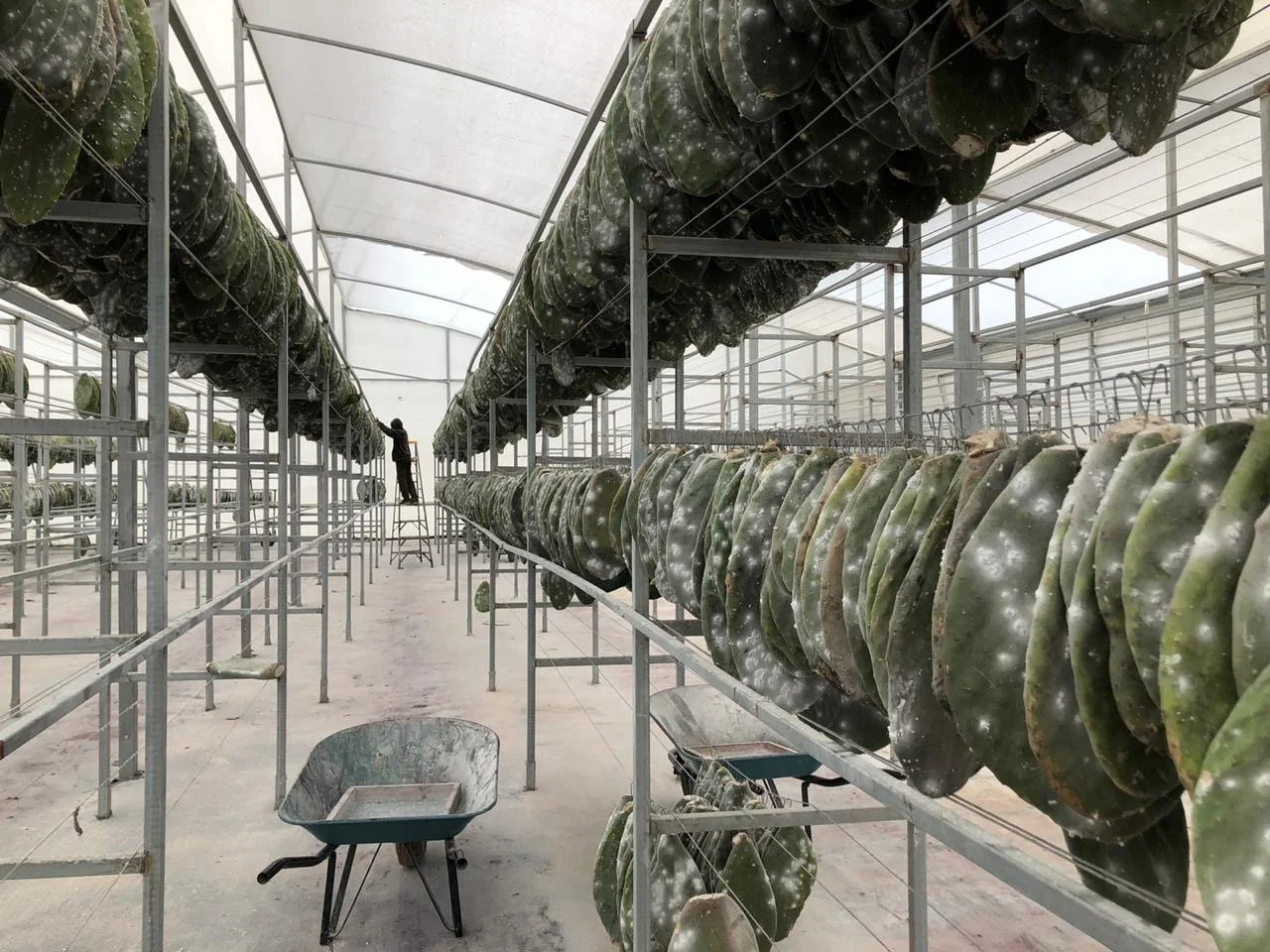
The cochineal insect is a domesticated species, an achievement of human ingenuity developed hundreds or even thousands of years ago. Farming these insects begins with cultivating their host plant, the cactus, which provides both food and shelter.
It takes approximately 1,200 cactus leaves to produce just one kilogram of cochineal insects. Preparing this many leaves can require five people working full days for two weeks, plus one or two additional caretakers to tend the insects for three to four months until harvest.
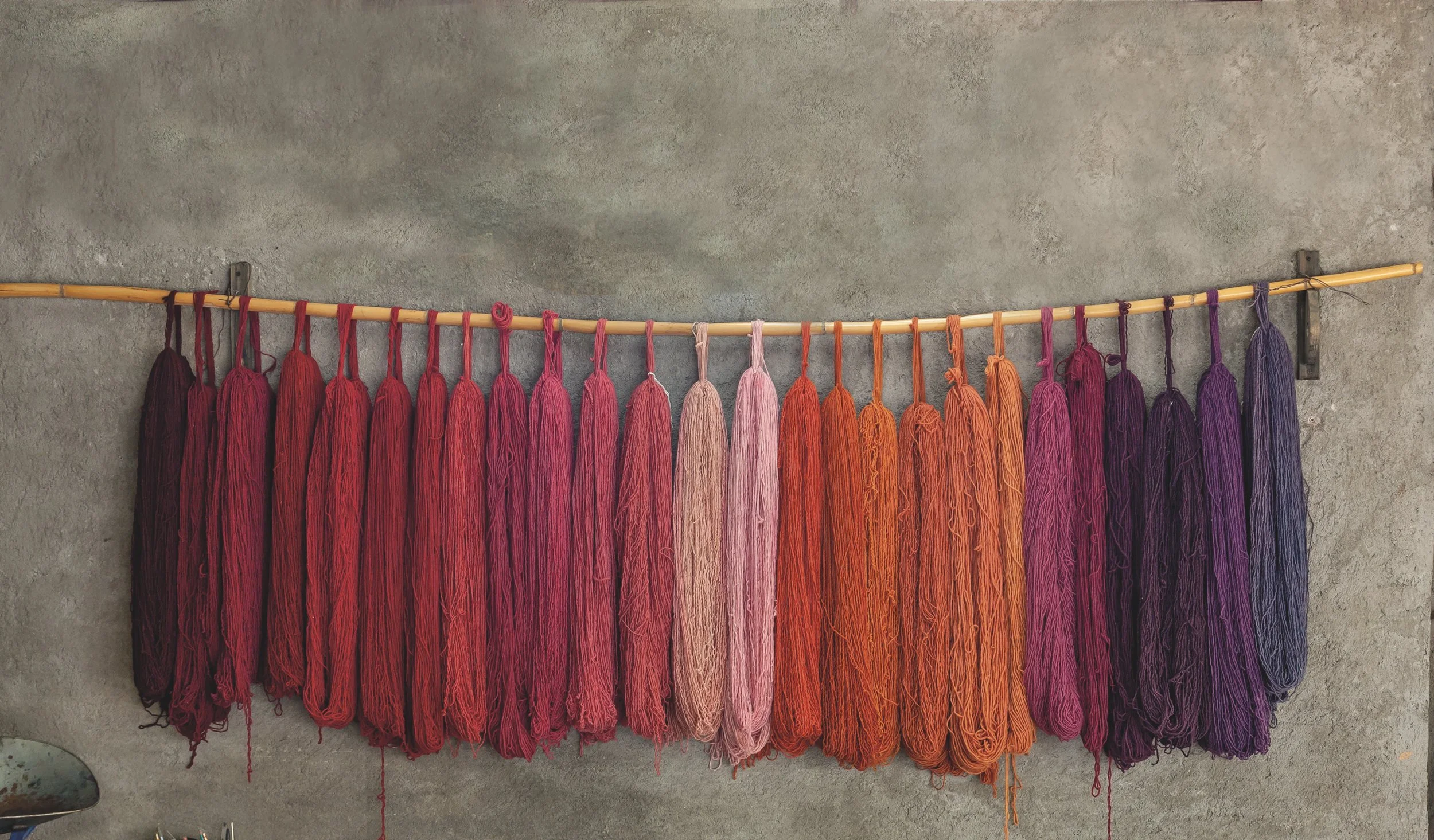
It takes between 60,000 and 70,000 insects to make a single pound of dyestuff. Depending on the desired shade of red, obtaining even one color can take one or several days of careful work.
The cochineal’s life cycle is roughly three months, and depending on weather conditions, farmers may harvest two or three times a year. These insects have long provided the vibrant reds that have been cherished for centuries.
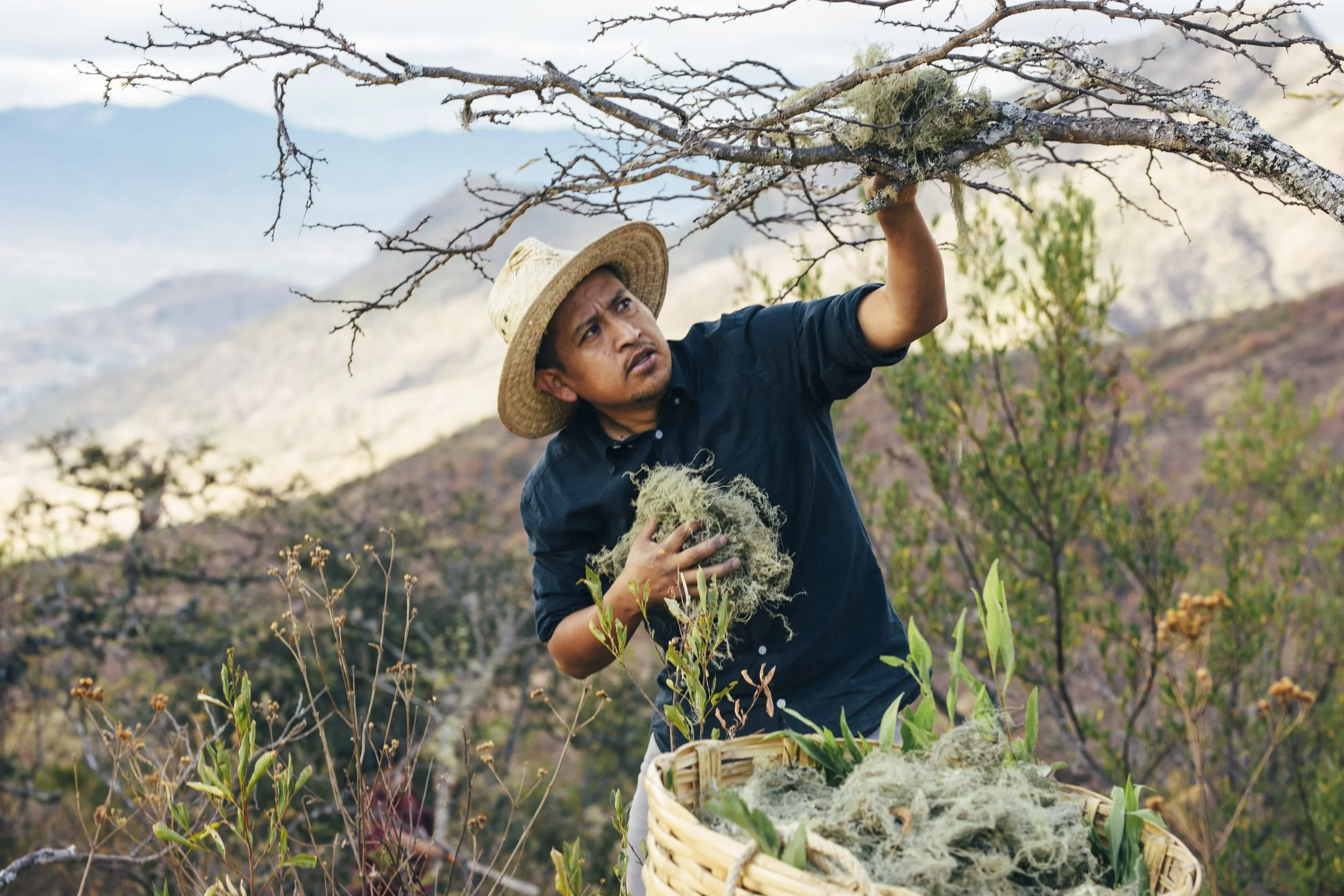
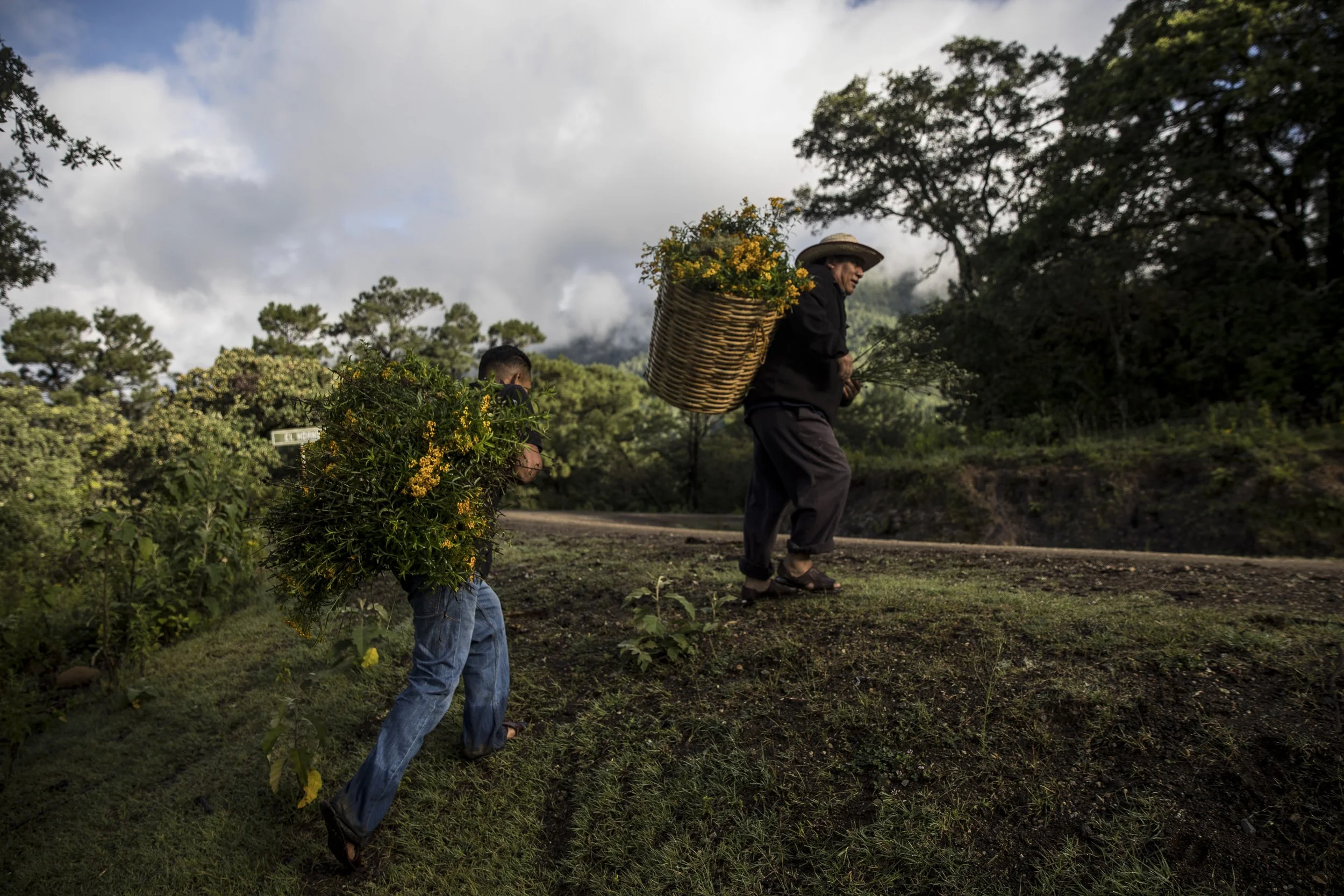
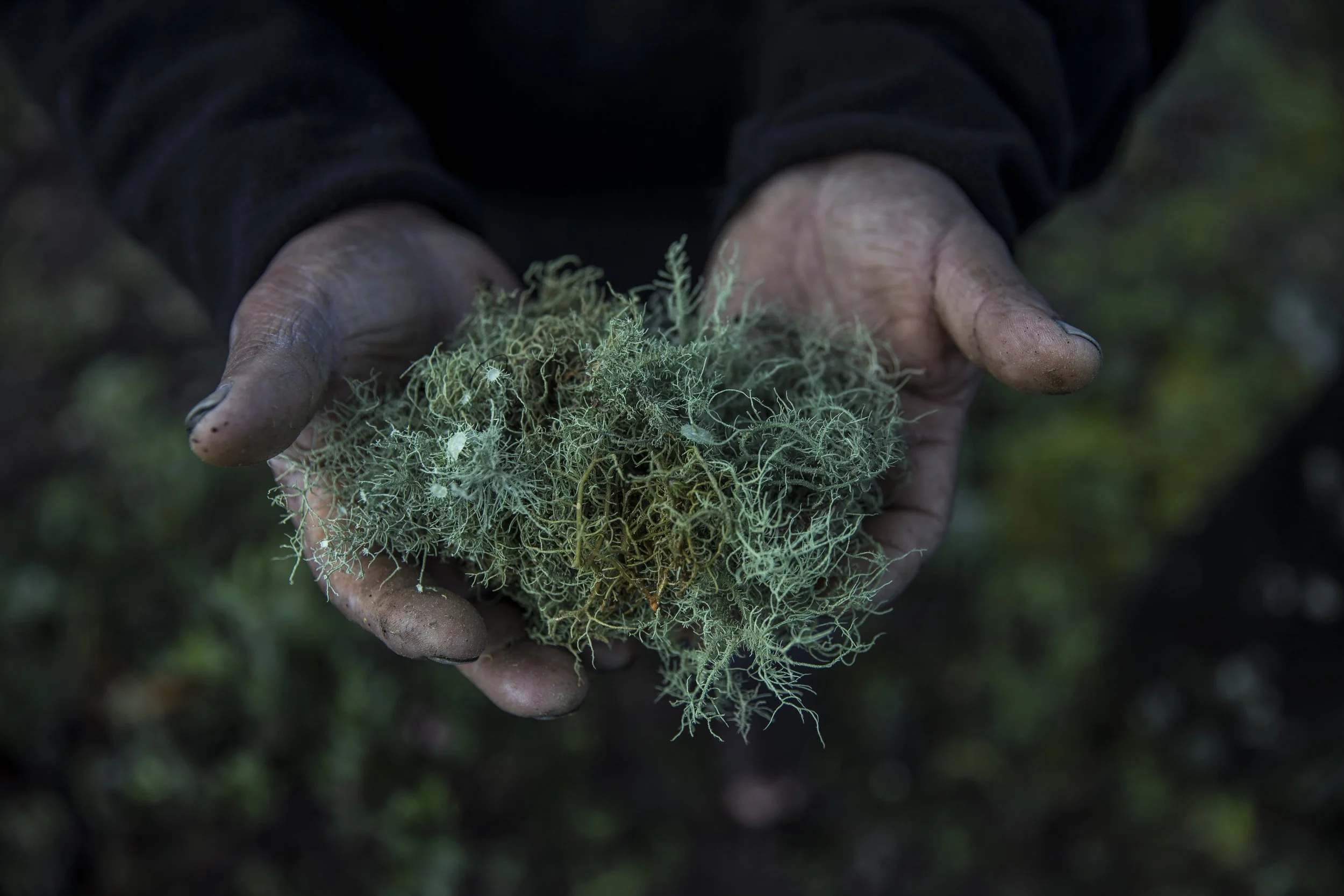
Elements grown in the wild
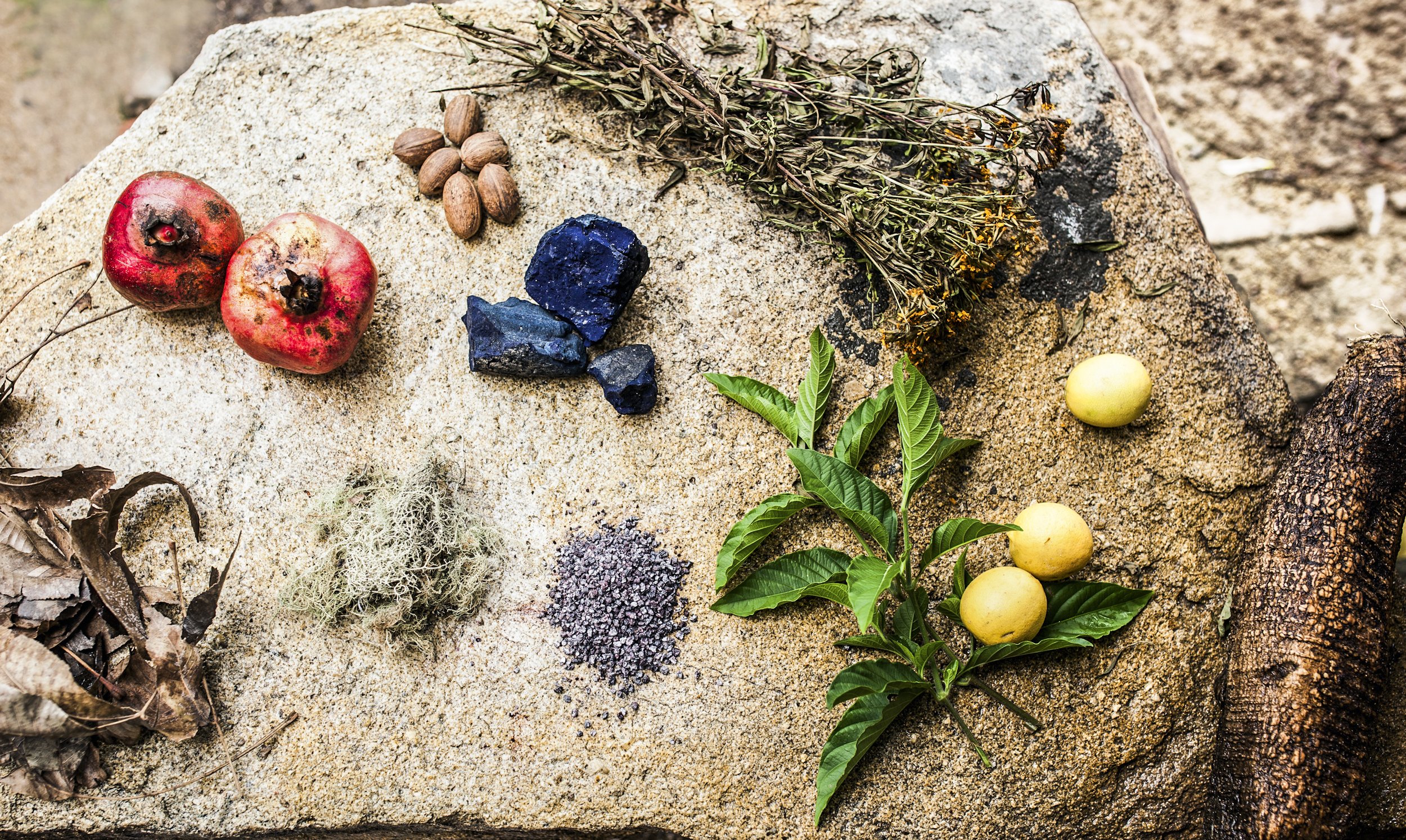
Pericón, along with other plants used by the studio, grows in the wild. In seasons of abundant rain, it is found in the foothills of our community; in a normal, healthy rainy season, it grows in the mid-range of the mountain; and during drier seasons, it is found higher up and in progressively smaller amounts. Pericón produces shades of yellow and is often used as a color foundation for cochineal insects and indigo, expanding the studio’s color palette. Harvesting is carried out by studio members in the month of November.
Unlike tree moss, lengua de vaca, cacho de venado, and chamisa, which also grow in the wild, these plants are harvested during the drier months. These materials exemplify how natural rhythms determine not only how much is available, but which objects can be made and in what quantities. This ancestral approach allows nature to regenerate and supports a healthy, balanced ecosystem.
Elements grown in family gardens
Pomegranate, sapote, marush, and lemons are grown in family gardens, yet they remain tied to seasonality and the viability of each material. In total, the studio works with around twelve elements, which together form the full color vocabulary for every object created. Each object thus becomes a living archive, representing a specific moment in history — when and where the plants were harvested.
Every harvest captures a memory of nature itself. Centuries from now, one could look at an object and trace how the landscape appeared at the time of its making, seeing history and nature reflected in color.
Wool yarn
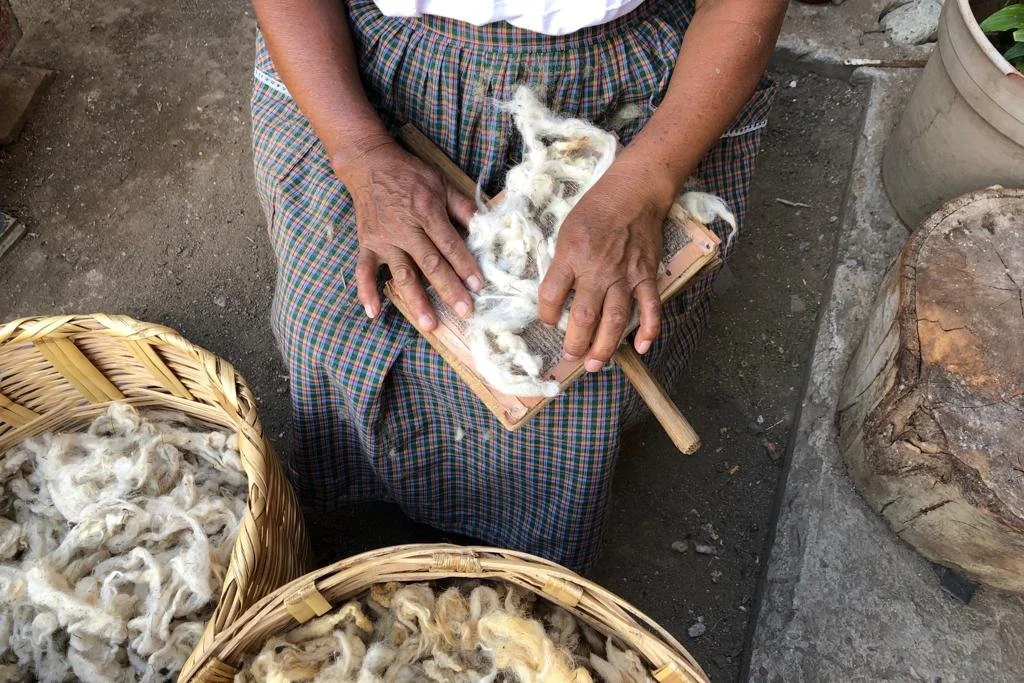
Same principles are applied with yarns used to make each object. Weather is wool from sheep, silk and cotton they all represent the seasonality, time and labor. From shearing to washing and spinning one kilo of wool it takes around one month.
Weaving
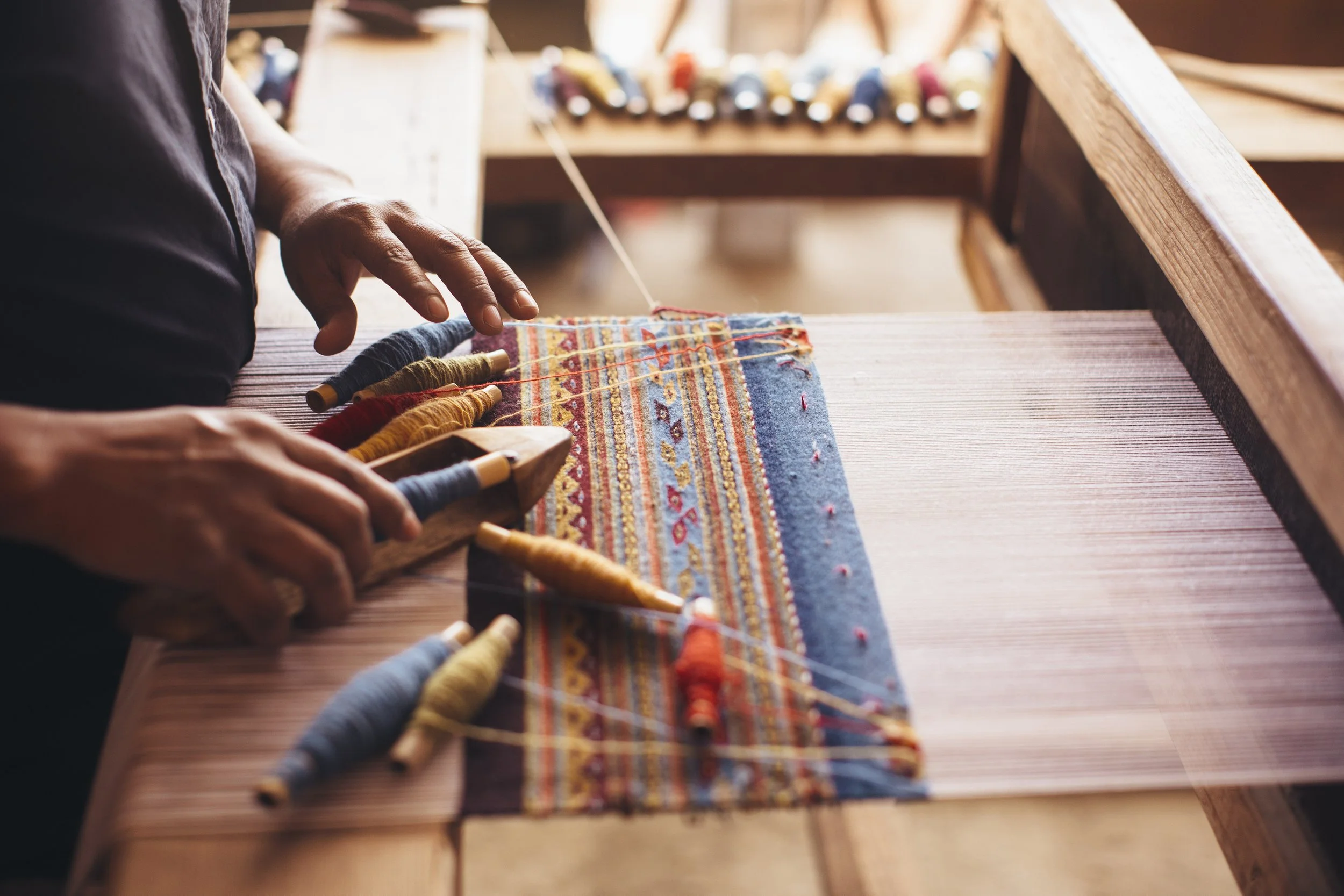
Weaving is done on a traditional standing treadle loom. This pedal loom requires the coordinated movement of feet on the treadles, hands on the beater, bobbins, and shuttle, all while keeping track of intricate design details. Each time a color changes in the pattern, a different bobbin must be inserted.
The more intricate the design, the finer the thread count and yarn, the longer a piece will take to complete. A 2 × 3-foot rug can require up to 800 hours of work and the collective effort of around twenty people — from farmers, spinners, dyers, to those who finish the piece’s details.